IWS Challenge 2022: Integrated AI for Water Systems

Competition-winning P2O stack for prediction, protection, and optimization of wastewater networks
Md Nazmul Kabir Sikder1, Feras A. Batarseh2, Imad L. Al-Qadi1
1Virginia Tech, Bradley Department of ECE (CCI)   |   2Virginia Tech, Biological Systems Engineering
💻 Code & Assets 🖼 Gallery

Abstract

P2O (Prediction, Protection, Optimization) tackles overflow risk and cyber-physical threats in wastewater treatment plants. The stack forecasts tunnel water levels, flags malicious sensor manipulation, and prescribes pump schedules that minimize chemical use and avert spills. The system scored top marks in the IWS Challenge 2022 by pairing deep learning forecasters with threat classifiers and a genetic algorithm recommender.

Challenge Tracks

Prediction

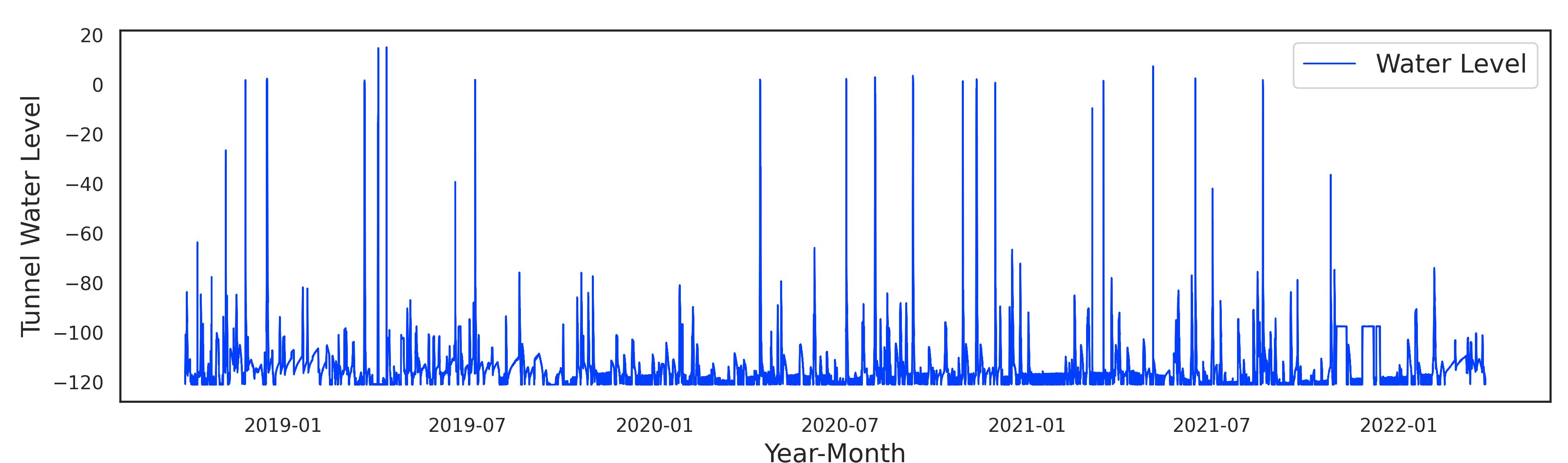
LSTM-based multivariate forecasting on four years of tunnel data (367k rows) using downsampling, PCA variants, and time-series cross-validation.

Protection

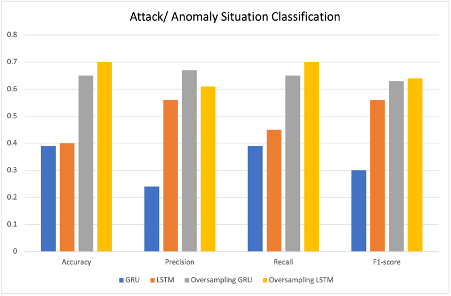
RNN models (LSTM/GRU) trained on SMOD cyber-physical scenarios to classify intentional vs. unintentional anomalies and attack situations.

Optimization

Genetic algorithm that chooses pump start time, runtime, and capacity to prevent overflow while cutting wet-weather chemical treatment.

Decision Support

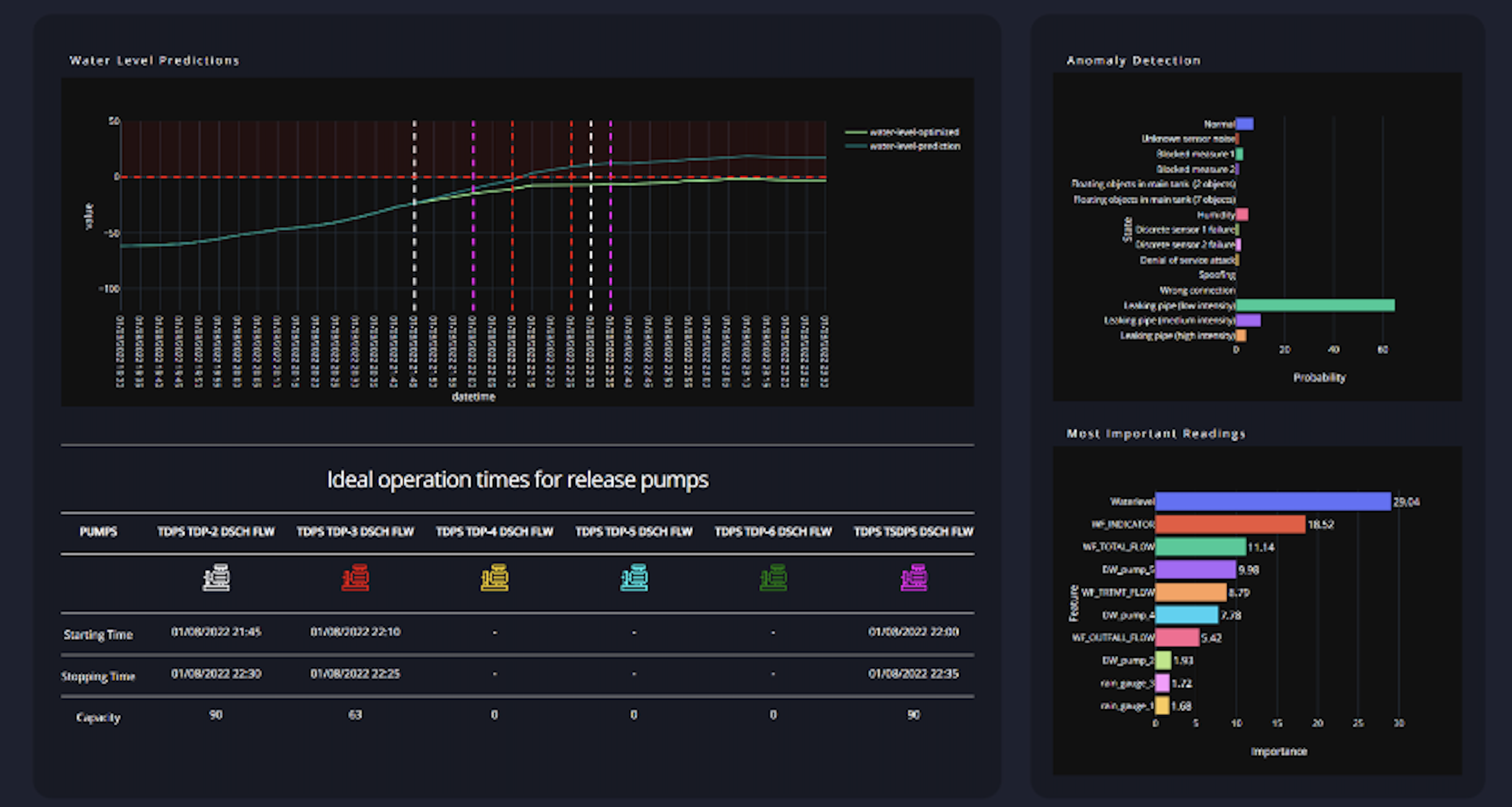
Operators receive risk-aware forecasts, top contributing sensors, and actionable pump schedules for extreme-weather operations.

System Overview

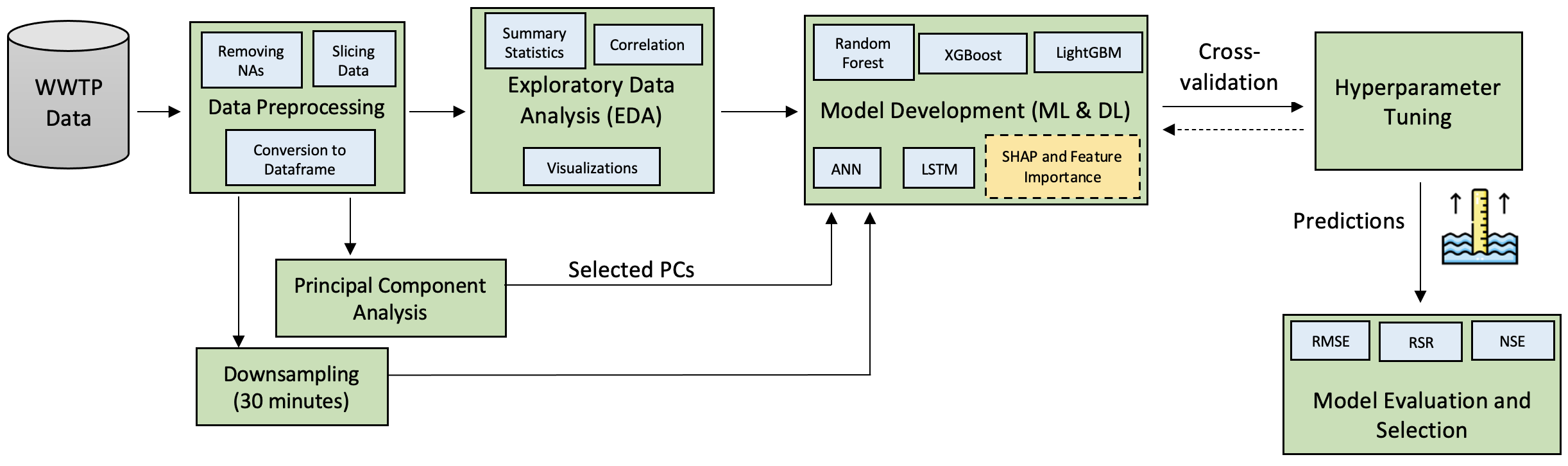
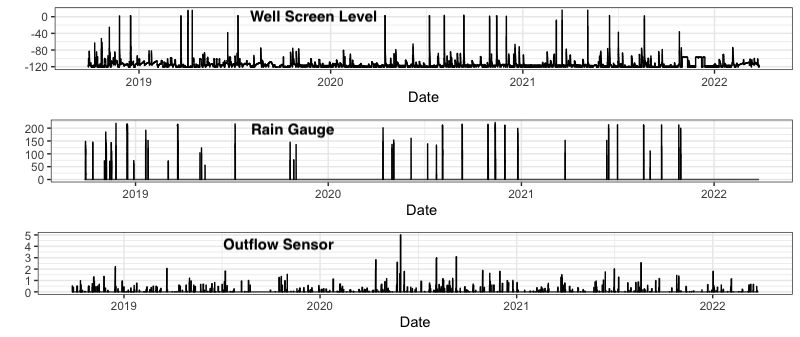
Two datasets drive P2O: a full-scale WWTP tunnel archive (flow, rain, pumps, level) and the SMOD Modbus intrusion suite. The pipeline cleans and aligns signals, fits forecasting and detection models with time-aware validation, and feeds predictions into a GA that recommends pump actions under safety thresholds.
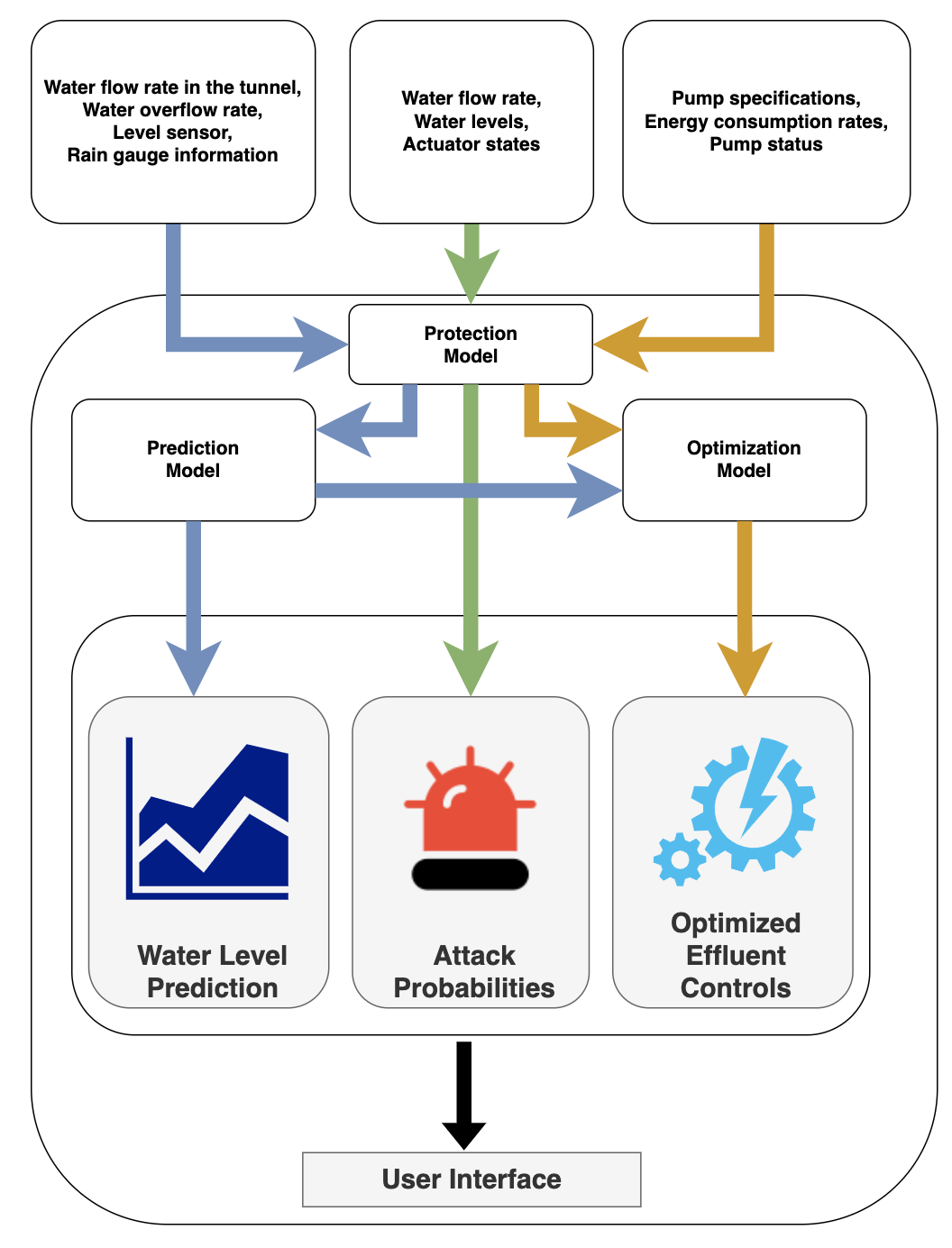
Prediction, protection, and optimization workflow.

P2O unifies forecasting, threat detection, and pump scheduling.

Modules

Water-Level Forecasting

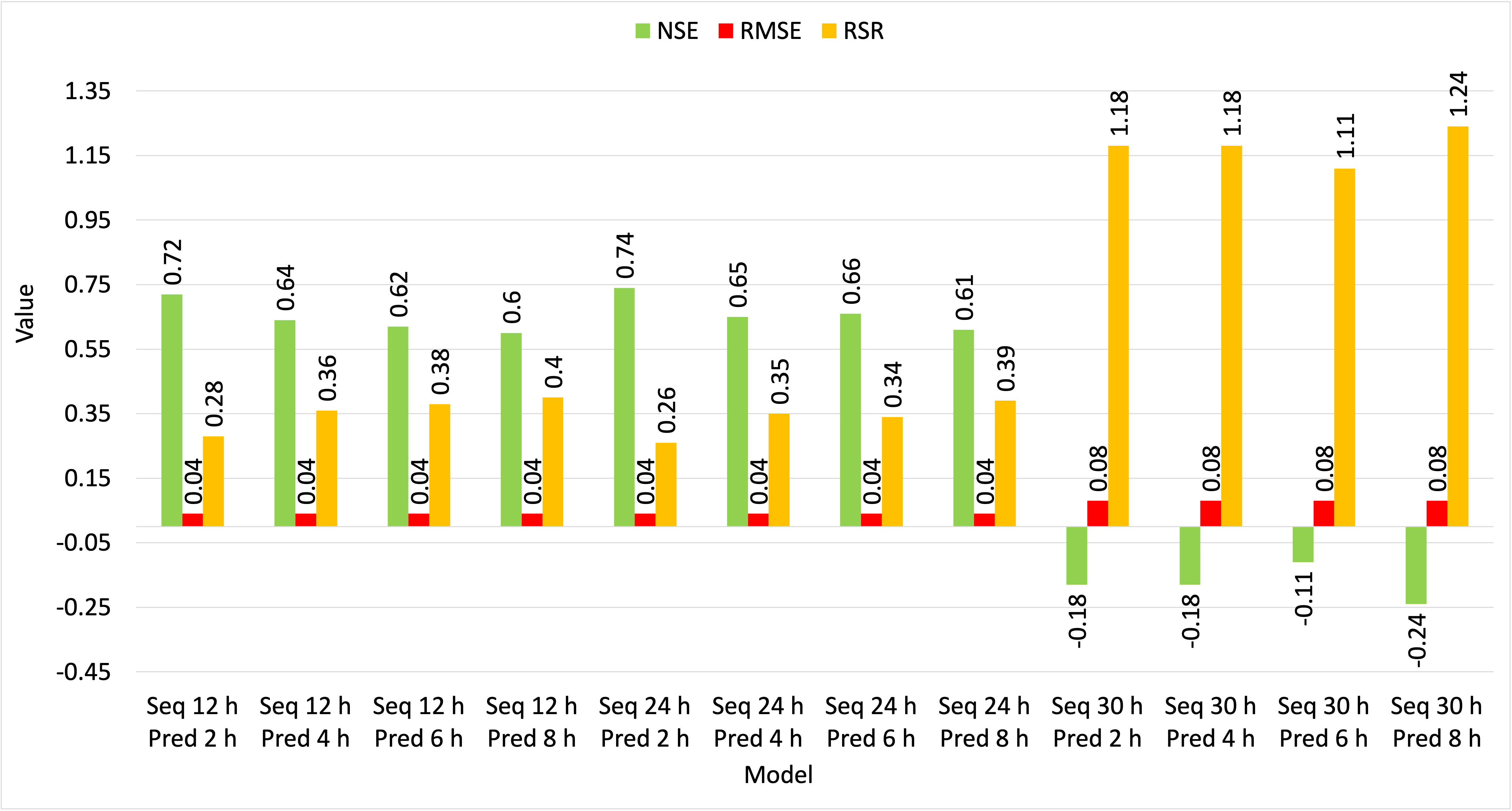
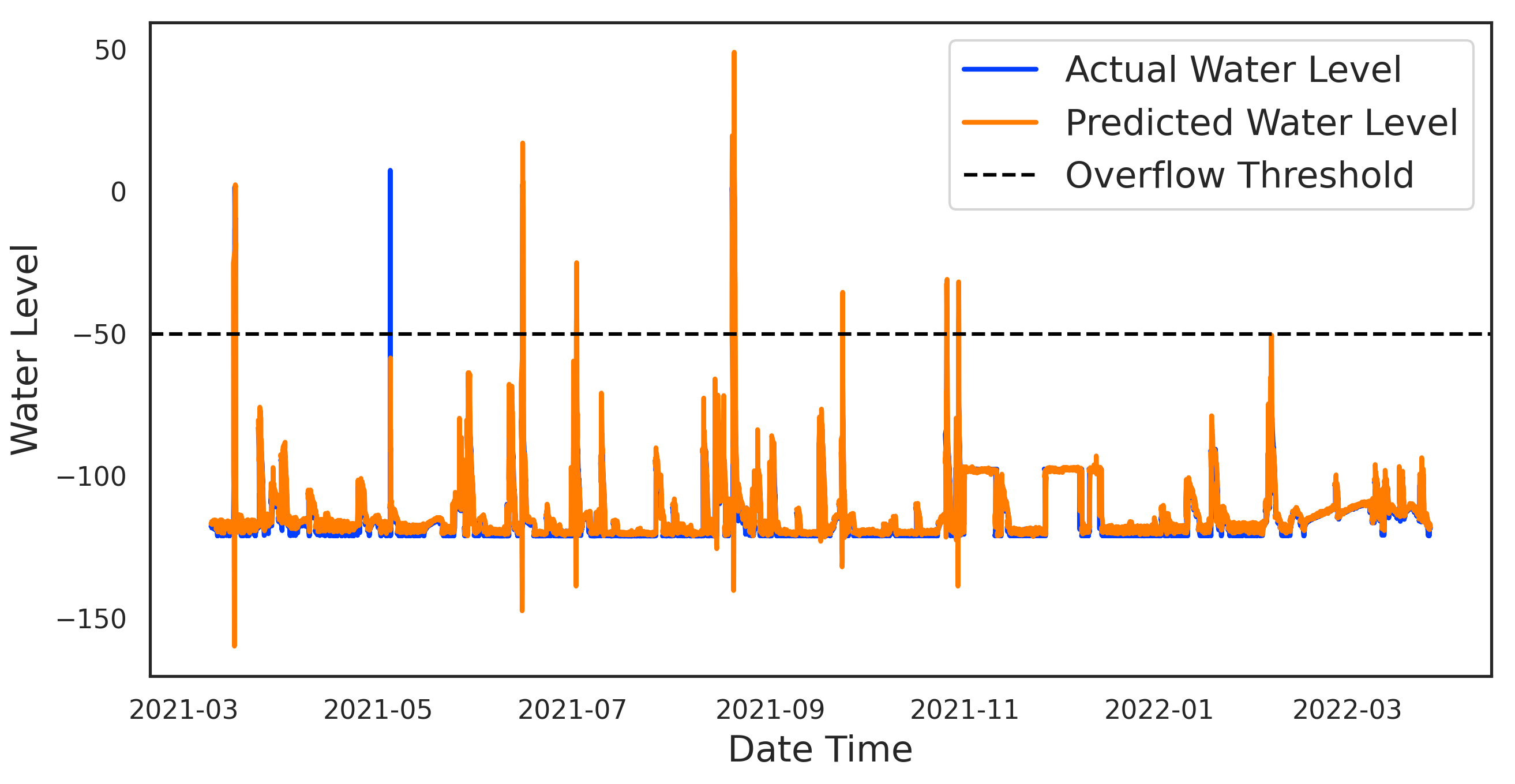
Grid-searched RF/GBM baselines vs. tuned LSTM forecasters. Best model: 24h input, 2h horizon LSTM with cubic loss, RMSE 0.036 and NSE 0.739; 85% soft-warning peak recall at −50 m.

Threat Detection

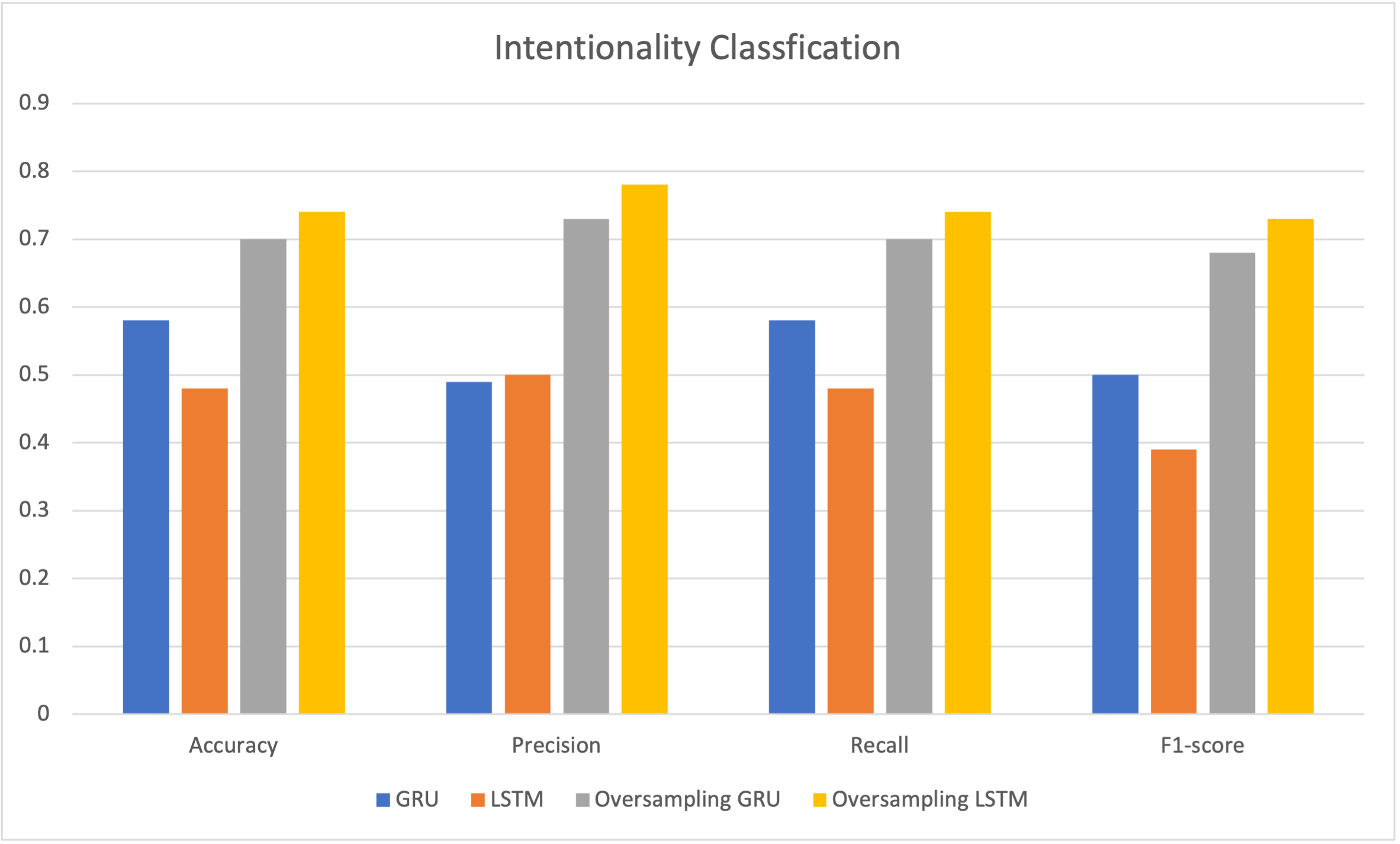
Oversampled SMOD scenarios; LSTM and GRU classifiers. LSTM yields higher macro accuracy, GRU minimizes intentional attack misses; protection detects 94–97% intentional attacks.

Optimization

Tournament + half-uniform crossover GA over pump start/run/capacity chromosomes. Achieves 23% reduction in chemical treatment volume and zero simulated overflow across five years of storms.

Explainability

SHAP highlights top drivers: tunnel level, flow sensors, pump 5 state, and treatment flow, guiding sensor trust and operator focus.

Key Outcomes

RMSE 0.036LSTM 24h→2h horizon
85%Peak soft-warning recall
94–97%Intentional attack detection
−23%Chemical treatment volume
0Simulated overflows (5y)
Optimization schematic for pump scheduling.

GA-based pump scheduling reduces wet-weather chemical load while meeting safety thresholds.

Takeaways

  • Time-aware validation and downsampling were critical to stable tunnel forecasts; LSTM outperformed boosted trees on peaks.
  • Separate threat detectors for intentional vs. unintentional events reduce false negatives on high-severity attacks.
  • GA-driven pump scheduling cuts chemical usage without sacrificing safety under extreme rain events.